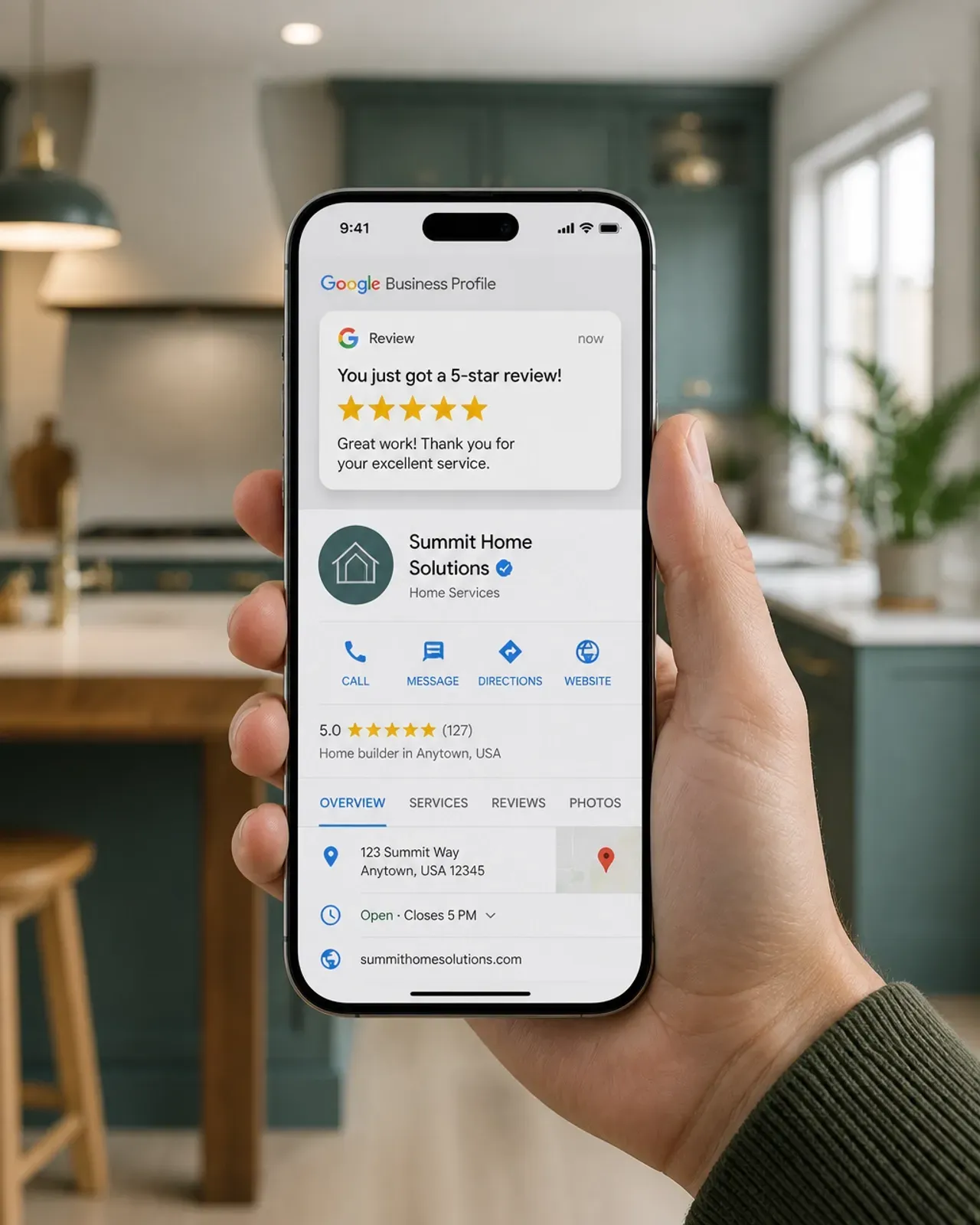
An attorney or small business owner searching for a local law firm finds results in two places now: Google’s map pack and AI-generated answers. This playbook covers both.
Quick Answer: Local SEO for law firms means making your firm easy to find, understand, and trust in both Google Maps and AI-powered search. Start with an accurate, complete Google Business Profile, consistent firm details across reputable directories, and useful location and practice-area pages. Build reviews steadily and ethically, publish clear answers to client questions, and measure qualified inquiries, not rankings alone.
WHY DOES LAW FIRM LOCAL SEO NEED A DUAL STRATEGY?
People looking for legal help may search for an attorney nearby, compare firms in Google’s Map Pack, or ask an AI tool to explain their options and recommend a provider. A durable local SEO plan helps your firm show up across both discovery paths.
The Map Pack is tied to local relevance, distance, and prominence. Google says complete, accurate Business Profiles can help improve visibility, but there is no way to pay for a better local ranking. Distance matters, too: one office will not necessarily rank across an entire metro area. Google’s local ranking guidance explains these factors.
AI recommendations are another reason to make your firm’s information consistent and your content useful. A Whitespark study of 540 queries found AI Overviews appeared on an average of 68% of its searches, while local packs appeared on 93% of local-intent queries. Those results describe a specific multi-city sample, not a guarantee for every legal search.
The practical takeaway: optimize your firm’s local presence for high-intent searches and publish clear, credible answers for research-oriented questions.
HOW SHOULD YOU OPTIMIZE YOUR GOOGLE BUSINESS PROFILE?
Your Google Business Profile (GBP) is a core part of local visibility. Complete it accurately so prospective clients, and search platforms, can understand what your firm does and where it serves clients.
Use this checklist for each eligible office:
- Choose the most specific accurate primary category. Select the category that best describes the firm’s main service. If personal injury is the firm’s focus and the category is available, “Personal Injury Attorney” is more descriptive than a generic “Attorney.” Add relevant secondary categories only when they accurately reflect services offered.
- Keep business information current. Confirm your real-world firm name, address, phone number, hours, website, and intake or appointment link. Add appropriate services and current photos.
- Represent real locations. Create a profile only for an eligible office. Do not use a virtual office, keyword-stuffed business name, or fabricated service-area location.
- Publish a substantive post weekly. Share useful updates such as a plain-language legal explainer, a change in office hours, or an invitation to a public information session. Keep claims accurate and review posts for compliance with your jurisdiction’s rules.
- Check performance. Monitor calls, website clicks, direction requests, and qualified inquiries through Business Profile performance reporting.
A post should offer value, not just repeat a keyword. A short explanation of what to bring to an initial consultation is more useful than a generic “Call us today” update.
HOW DO YOU BUILD LOCAL RELEVANCE WITHOUT CREATING FAKE LOCATIONS?
Create a useful page for each real office and a distinct page for each core practice area. Each page should explain the service, identify the attorneys responsible for the information, and give visitors a clear next step.
For a Lexington, Kentucky firm, a location page can describe its actual Lexington office and the communities it serves. A practice-area page can explain how that service works in Kentucky and link to the relevant attorney biographies. Do not imply you have an office in a city where you do not.
Write for prospective clients first:
- Put a direct answer near the top of each page.
- Use specific headings that reflect real client questions.
- Explain legal terms in plain language.
- Identify the author or reviewing attorney and include accurate credentials.
- Link related location, practice-area, attorney, and contact pages.
- Review legal information regularly for accuracy and jurisdictional fit.
AEO and GEO, answer and generative engine optimization, are not shortcuts around sound content. They are reasons to make your information clear, verifiable, and easy to interpret. No markup or format can guarantee an AI citation.
HOW CAN REVIEWS SUPPORT LOCAL VISIBILITY ETHICALLY?
Reviews can influence a prospective client’s decision and contribute to a firm’s reputation. A compliant process prioritizes steady, genuine feedback rather than quick bursts or manufactured praise.
Ask appropriate clients neutrally and consistently, subject to your jurisdiction’s professional-conduct rules. A client may choose to mention the type of matter handled, but do not script the review, pressure them to disclose sensitive facts, or ask only clients you expect to be positive.
Never incentivize reviews. Do not offer money, gifts, discounts, or other benefits in exchange for a review. Avoid review gating, selecting only satisfied clients to receive a public review request, and never write or post a review on a client’s behalf.
Respond professionally without confirming representation or discussing confidential information. Because rules vary by state, have the responsible attorney review the firm’s solicitation and response process. New York State Bar Association Ethics Opinion 1286 illustrates why even requesting reviews can raise jurisdiction-specific confidentiality concerns.
WHICH DIRECTORIES AND CITATIONS SHOULD A LAW FIRM MAINTAIN?
Accurate listings help establish a consistent picture of the firm across the web. Prioritize reputable legal directories, such as Avvo, Justia, and Martindale, along with relevant bar associations and local professional organizations.
Check that each profile uses the same firm name, address, phone number (NAP), and website as your GBP and website. Correct outdated addresses, duplicate listings, and inconsistent phone numbers. Directory accuracy matters more than submitting the firm to every directory available.
WHAT ROLE DOES SCHEMA MARKUP PLAY IN LAW FIRM SEO?
Structured data helps search engines interpret business and location details. For each real office, have your developer implement accurate LocalBusiness data and consider the Schema.org LegalService type for a legal-services business. Use only details that appear on the page and are true, such as the firm name, address, phone number, URL, and hours.
Google recommends using the most specific applicable local-business subtype and validating markup before release. Schema clarifies information; it does not guarantee higher rankings or AI recommendations.
HOW CAN DIRECT MAIL REINFORCE LOCAL SEARCH?
Local SEO makes your firm easier to discover when someone searches. Direct mail can put a recognizable, tangible message in front of a local audience before that search happens. When the same firm identity and message appear across channels, a mail piece can reinforce recognition when a person later checks Google, visits your site, or compares attorneys.
GoodPath Marketing integrates direct mail with digital campaigns and conversion-optimized websites. GoodPath reports a 124% average ROI increase from its hybrid model and 2–5x higher response rates compared with digital-only campaigns. These are company-level performance figures, not a promise of results for every law firm.
WHAT SHOULD A 90-DAY LAW FIRM LOCAL SEO PLAN INCLUDE?
Days 1–15: Fix the foundation. Audit GBP eligibility, categories, hours, contact details, NAP consistency, duplicate listings, and priority directories. Set review and advertising-compliance procedures.
Days 16–45: Strengthen key pages. Improve your main location and practice-area pages. Add clear answers, attorney authorship, internal links, and accurate structured data.
Days 46–75: Build trust and useful activity. Start a neutral review-request process, publish weekly substantive GBP posts, and create helpful content for common client questions. Keep every legal claim within your jurisdiction’s rules.
Days 76–90: Measure and refine. Track calls, qualified forms, consultations, and signed matters alongside local visibility. Use geo-grid tracking to understand how results vary by searcher location, and improve pages that attract the wrong inquiries or fail to convert.
FREQUENTLY ASKED QUESTIONS ABOUT LOCAL SEO FOR LAW FIRMS
How long does local SEO take for a law firm?
There is no fixed timeline. Results depend on factors such as the firm’s location, competition, current online presence, and how consistently it improves its profiles and pages. Track qualified inquiries over time rather than expecting a specific ranking date.
Should a law firm create a separate Google Business Profile for every city it serves?
No. Create profiles for eligible, real-world offices, not every city in a service area. Use location pages to accurately explain where the firm serves clients without implying an office exists there.
Do Google reviews help a law firm’s local SEO?
Reviews can contribute to prominence and help prospective clients assess a firm. Request them consistently and ethically, without incentives, review gating, or pressure to share confidential details.
Does schema markup guarantee that AI search tools will recommend a law firm?
No. Structured data can clarify accurate business information, but it does not guarantee rankings, rich results, citations, or AI recommendations. Pair it with complete profiles and useful, trustworthy content.
Can direct mail work with local SEO?
Yes. Direct mail can reinforce firm recognition in the local market, while search and a conversion-focused website help interested people find information and take the next step. Connect campaign tracking to measurable inquiries.
BUILD A LOCAL SEARCH PRESENCE THAT WORKS ACROSS CHANNELS
Local SEO is not one profile or one ranking. It is the combined work of accurate business data, useful legal content, ethical reputation-building, and a strong path from discovery to consultation.
For a growth partnership that connects local search with direct mail and conversion-focused websites, talk with
GoodPath Marketing.