Why Direct Mail Still Works for Small Businesses — A GoodPath Marketing Guide
Direct Mail Still Works for Small Businesses in a Digital‑First World
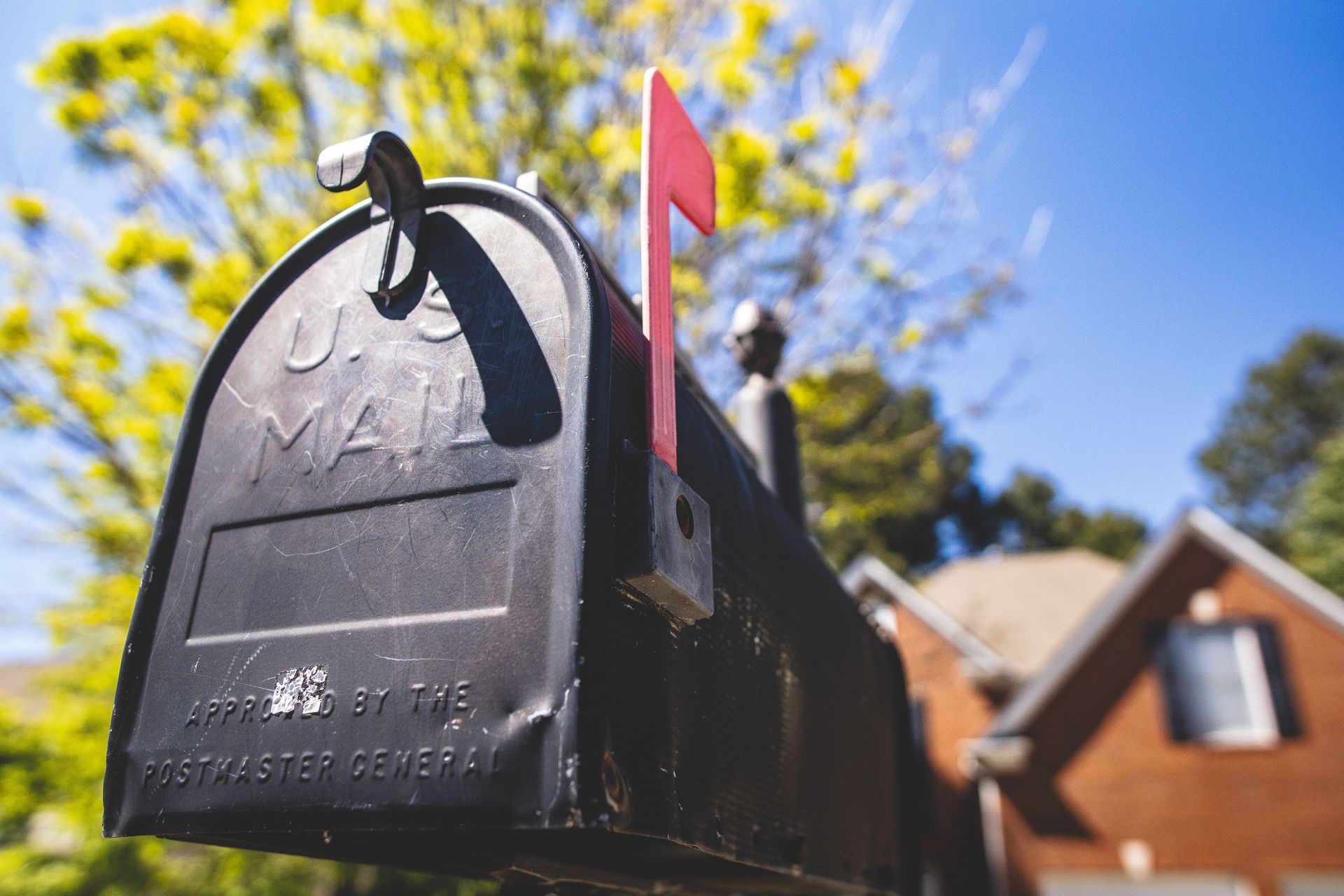
Small business owners often ask why direct mail still matters in a digital-first market. Direct mail works for small businesses because it delivers a physical, personal touchpoint that digital ads cannot replicate, helping you build trust with local customers. Unlike an email that gets deleted or an ad that gets scrolled past, a postcard or letter sits in someone's hands and holds their attention.
You already know your customers value personal connections, and direct mail marketing reflects that same quality. It gives you a way to reach specific neighborhoods or customer segments with a message that feels tailored to them. This makes it a practical addition to your small business marketing efforts, especially when you want to stand out from competitors relying only on digital channels.
Your marketing strategy doesn't have to choose between digital and physical outreach. At GoodPath Marketing, we help local businesses use direct mail alongside their online campaigns to reinforce their message and reach customers at different touchpoints. Understanding how and why this channel works will help you decide if it fits your goals and budget — and if you'd rather have a team handle it for you, that's exactly what we do.
The Small-Business Advantages of Direct Mail
Small businesses gain several practical advantages from direct mail that digital-only strategies cannot easily replicate. These advantages center on trust, visibility, and long-term customer relationships.
Tangible Marketing Builds Trust and Credibility
When you send a physical mail piece, you're offering something a customer can hold, read, and set aside for later. This tangible marketing approach signals investment and legitimacy in ways that online ads often can't.
Customers tend to view businesses that use direct mail as more established. A well-designed postcard or letter suggests you have the resources and confidence to reach people directly.
For SMBs competing against larger companies, this matters. Credibility gaps can be narrowed simply by showing up in someone's mailbox with a professional, well-crafted piece.
Trust builds faster when customers can verify you're a real, accountable business — and a physical address on a mailer does exactly that.
Standing Out From Digital Fatigue and Ad Blockers
Digital fatigue is real. Most people scroll past online ads without registering them, and many actively use ad blockers to avoid seeing them at all.
Direct mail bypasses this problem entirely. There's no blocker for your mailbox.
Your message reaches the recipient without competing against pop-ups, autoplay videos, or algorithm changes that limit reach. Digital advertising runs into ad blockers and banner blindness, social media contends with algorithm suppression and feed fatigue, but direct mail gets physically delivered and is harder to ignore than either.
For small businesses with limited ad budgets, this distinction matters. You're not fighting for attention in an oversaturated digital space.
Creating Lasting Brand Recall and Customer Engagement
Physical mail tends to stay visible longer than a digital ad. A postcard on a counter or a letter on a desk keeps your brand awareness active well after delivery.
This extended visibility supports stronger brand recall. Customers are more likely to remember your business when your mail piece sits in their physical space for days, not seconds.
Direct mail also strengthens customer relationships by adding a personal layer to your outreach. Even younger demographics — including millennials and Gen Z, who receive less physical mail than older generations — often view direct mail as a novel, attention-grabbing format.
This can lead to stronger customer engagement, since your message doesn't blend into a crowded digital feed.
Reach Local Customers With the Right Targeting
Small business direct mail works best when you match your list type to your goals, whether that means a curated mailing list of past buyers or full neighborhood coverage through USPS. The method you choose determines your reach, your cost per piece, and how closely your message matches the people who receive it. GoodPath Marketing can help you decide which approach fits your goals — reach out and we'll walk through it with you.
When To Use Targeted Mailing Lists
You should use targeted mailing lists when you already know who your best customers are. If you have purchase history, service records, or sign-up data, you can build a list around those patterns instead of guessing.
Targeted mailing lists work well when your product or service only appeals to a specific group. A landscaping company might target homeowners in certain zip codes with lawns over a set size. A pediatric dentist might target households with children under 12.
Here’s when targeted lists make the most sense:
- You have a defined customer profile based on income, age, or homeownership
- You want to re-engage past customers or leads
- Your offer only applies to a narrow segment of the population
- You're testing a new product with a specific audience
Using Every Door Direct Mail for Neighborhood Coverage
Every Door Direct Mail (EDDM) is a USPS program that lets you mail to every address on a chosen route without a purchased list. You select routes based on carrier paths, and USPS delivers to every household or business along them.
This approach fits businesses with broad local appeal, such as restaurants, gyms, or home service providers. You don't need names or addresses ahead of time, which lowers your setup cost and cuts prep time.
EDDM works best when your goal is visibility across a defined area rather than precision targeting. You trade some accuracy for lower cost per piece and simpler logistics. For small businesses opening a new location or building local awareness, EDDM often delivers strong reach without the expense of list acquisition.
Choosing an Audience Based on Business Goals
Your targeting method should follow directly from what you're trying to accomplish with each mailing. A retention campaign calls for a mailing list built from your own customer data, while a brand awareness push in a new area often calls for EDDM instead. If you want to test a new offer with high-value prospects, a targeted mailing list is the better fit; if your goal is covering a large area at the lowest possible cost, EDDM makes more sense.
Your budget also plays a role. Targeted lists cost more per address but reduce waste. EDDM lowers your per-piece cost but sends mail to everyone on the route, including people outside your ideal customer profile.
Choose a Mail Format That Fits the Offer
The format you select determines how much information you can include, how the piece gets processed as business mail, and how your recipient reacts when it lands in their hands. Match the format to your offer's complexity rather than picking based on preference alone.
Postcards for Simple, Fast Promotions
Postcards work best when your message is short and your call to action is clear. A discount code, a limited-time sale, or a simple announcement fits well on a single card with no envelope to open.
Recipients see your message immediately, since there's nothing blocking the offer from view. This format also costs less to print and mail compared to multi-piece mailers.
Use postcards when you need:
- A quick response to a specific promotion
- Lower printing costs for high-volume campaigns
- A format that doesn't require the recipient to open anything
Postcards work less well when your offer needs explanation or multiple details to make sense.
Letters and Brochures for More Detailed Messages
Letters give you room to explain your offer, address objections, and speak directly to the reader in a personal tone. This format works when you're introducing a new service, explaining pricing tiers, or building a relationship with a first-time customer.
Brochures add visual support alongside the letter, letting you show products, list features, or break information into sections. Pairing a letter with a brochure inside an envelope gives you both the personal appeal and the visual detail.
This combination suits offers that require trust-building or explanation before someone acts. It costs more than postcards but performs well when the decision isn't a quick one.
Self-Mailers, Catalogs, and Dimensional Mailers
Self-mailers fold without an envelope, giving you multiple panels to tell a longer story while keeping costs below full catalog printing. They suit mid-length offers, such as a seasonal promotion with several products or services listed.
Catalogs work when customers need to browse a range of items before choosing. They fit retailers, product-based businesses, or any company where the recipient benefits from seeing options side by side.
Dimensional mailers stand out because of their shape or thickness, arriving as a box or object rather than a flat piece. They cost more per piece but generate strong attention for high-value offers or key accounts.
Consider these formats when:
- Your offer involves multiple products or services
- You want the piece to stand out in a stack of marketing mail
Your budget supports a higher cost per direct mail piece for a smaller, targeted list
Create a Direct Mail Campaign That Drives Action
A direct mail campaign works best when it pairs a personalized offer with a clear call to action, giving recipients an obvious reason to respond. Discounts and coupons add measurable incentive, turning interest into foot traffic and completed sales.
Developing Personalized Offers and Special Offers
Personalized offers perform better than generic ones because they speak directly to a recipient's situation. Address the mail piece by name, not "Resident," and reference details relevant to the audience segment.
A landscaping company might send a spring cleanup discount to homeowners, while a pediatric dentist might send a back-to-school exam reminder to families with children.
Special offers should feel exclusive to the recipient. You can structure them around:
- First-time customer discounts for new prospects
- Loyalty rewards for existing customers
- Seasonal promotions tied to a specific time of year
Your marketing campaigns gain traction when the offer matches what the recipient actually needs, not a generic promotion sent to everyone on a list.
Writing a Clear Call to Action
Your call to action tells the recipient exactly what to do next. Vague language reduces response rates, so use direct instructions instead.
Examples include "Call 555-0142 to schedule your appointment" or "Visit our store by September 30 to redeem this offer." Each instruction should include a specific action, a method, and a deadline where possible.
Avoid burying the call to action in paragraph text. Place it in bold or in a separate section of the mail piece so it's the first thing a recipient sees after the offer.
A weak call to action, such as "Learn more about us," gives no clear next step. A strong one removes any doubt about what you want the recipient to do.
Using Discounts and Coupons to Encourage Visits
Discounts and coupons remain one of the most reliable ways to convert a mail piece into foot traffic. A dollar amount off, such as "$20 off your next visit," often performs better than a percentage discount because it feels more concrete to the reader.
Coupons work well for retail stores, restaurants, and service businesses that depend on in-person visits. Include a clear expiration date to create urgency and prevent long-term redemption that skews your tracking data.
Tracking coupon redemption also tells you which segments respond best, information you can use to refine future direct mail campaigns. This directly affects customer experience too: a simple, honest discount builds trust, while a confusing or restrictive offer can create frustration at the point of redemption.
Direct mail becomes more measurable and more effective when it links directly to your digital channels. Combining mail with online tools gives you a way to guide recipients toward a specific action and see exactly how they respond — this is where GoodPath Marketing's digital and local-search services tie in directly with your mail campaigns.
Use QR Codes, PURLs, and Landing Pages
A QR code on your postcard takes recipients straight to a webpage without them typing a URL. This removes friction and makes it easier to track how many people acted on your mail piece.
Personalized URLs (PURLs) work similarly but add a layer of customization. Each recipient gets a unique web address, often tied to their name or household, which lets you identify individual responses rather than just aggregate traffic.
Pair both tools with a dedicated landing page built for the campaign. Avoid sending traffic to your homepage. Instead, create a page that matches the offer on your mailer, with a clear call to action and minimal distractions. This consistency between the physical piece and the digital destination improves your conversion rates.
Coordinate Email, Retargeting, and Digital Ads
Email marketing works well as a follow-up to direct mail. If a recipient visits your landing page but doesn't convert, a follow-up email can remind them of the offer and give them another chance to act.
Retargeting extends this further. When someone visits your site after receiving your mailer, you can serve them online ads across social media or other websites, keeping your offer visible without additional mail costs.
Coordinate timing across these channels. Sending a mailer, then following up with digital advertising a few days later, reinforces your message rather than duplicating it randomly. This layered approach means recipients see consistent messaging through multiple channels, which typically increases response rates compared to mail sent in isolation.
Track Responses, Conversions, and Customer Behavior
Tracking starts with defining what counts as a response. This could be a phone call referencing the mailer, a QR code scan, a PURL visit, or a completed form on your landing page.
Set up call tracking numbers unique to the campaign so you can attribute inbound calls directly to the mail piece. For online activity, use analytics tools to monitor landing page visits, time on page, and conversions.
Compare results across campaigns to identify patterns. If one offer or mailing list produces higher conversions than another, use that data to refine your next send. Tracking doesn't need to be complicated, but it does need to be consistent enough to show whether your mail is generating measurable activity.
Control Costs and Improve Return on Investment
Direct mail costs are predictable and easy to plan for, which makes it simpler for you to control spending and track what you get back. With a clear budget, an accurate ROI formula, and a habit of testing, you can turn direct mail into a measurable part of your marketing strategy rather than a one-time expense.
Build a Realistic Direct Mail Budget
Your direct mail budget should account for every cost, not just printing. Include design, list acquisition, USPS postage, and any variable data or tracking tools you plan to use.
A few line items to plan for:
- Design and copywriting (one-time or per campaign)
- List costs (house list is free if you already have it; prospect lists carry a fee)
- Printing and handling (your per‑piece rate covers production, shipping, and prep)
- USPS postage (always billed separately at standard USPS rates)
- Tracking tools (QR codes, call tracking numbers, or promo code setup)
Response rate averages run higher for house lists than for cold prospect lists, so factor that into your expectations before you mail. Once responses come in, track how many convert to paying customers and multiply by your average order value to get attributed revenue.
Compare that figure against your fully loaded cost, including any soft costs like staff time spent following up on inquiries. This gives you an honest number instead of an inflated one, and it tells you whether the campaign is worth repeating at the same scale or adjusting.
Test, Repeat, and Refine Future Mailings
A single mailing rarely represents your best possible result. Run a smaller test batch first, then use the response data to refine your list, offer, and design before scaling up.
Variable data printing lets you test multiple versions of the same piece — different headlines, images, or offers — sent to segments of your list. This shows you what resonates without committing your full budget to one approach.
Once you identify what works, repeat the winning formula and adjust the losing elements. Each mailing you send builds a data set that makes the next one more precise and more cost-effective.
Frequently Asked Questions
Does direct mail still work for small businesses?
Yes, direct mail continues to perform well for small businesses in 2026. Response rates for direct mail average around 4.4%, which is significantly higher than email's typical 0.12% response rate.
Many small business owners assume digital channels have replaced mail entirely, but that's not the case. Your mailbox has less competition than your inbox, since fewer companies send physical mail now.
How can small businesses use direct mail to attract new customers?
You can target new residents in a specific neighborhood, send postcards to households within a set radius of your location, or mail offers to people who match your existing customer profile. Local demographic data lets you narrow your list to households likely to need your product or service.
A coupon or limited-time discount included in your mailer gives recipients a reason to act quickly. Adding a QR code lets you track who visits your website after receiving the mail piece.
What are the benefits of direct mail marketing compared with digital advertising?
Direct mail gives you a physical presence in someone's home, which digital ads can't replicate. Your mailer sits on a counter or table, sometimes for days, while a digital ad disappears the moment someone scrolls past it.
Digital advertising costs have also risen sharply. Cost-per-click has increased across most industries in the past year, making direct mail a more predictable expense by comparison since printing and postage rates don't fluctuate the way ad auctions do.
How much does it cost to run a direct mail campaign for a small business?
Costs depend on the format you choose and the size of your mailing list. Postcards are typically your cheapest option once you account for design, printing, and postage, while branded merchandise mailers cost more but tend to stay in a customer's home longer.
You can test a campaign with a few hundred pieces before committing to a larger list. This lets you gauge response rates and refine your message without a large upfront investment.
How can a small business measure the success of a direct mail campaign?
QR codes and unique landing page URLs are the most common tracking tools for direct mail. When a recipient scans a code or visits a specific link, you know exactly which mailer drove that action.
You can also use unique coupon codes tied to each mailing batch. Tracking phone calls with a dedicated phone number listed only on your mailer works well too, since it isolates responses that came from that specific campaign.
What types of direct mail pieces generate the best response rates?
Postcards and letters tend to perform consistently well because they're quick for recipients to read and inexpensive for you to produce at scale. Oversized postcards can stand out further in a mailbox filled with standard-size envelopes.
Packages containing a small product sample or branded item, such as a magnet or pen, generate strong engagement too, since recipients are less likely to discard them right away. These cost more per piece, so they work best for a smaller, highly targeted list rather than a mass mailing.
Ready to put direct mail to work for your business? GoodPath Marketing designs, targets, and tracks direct mail campaigns for local small businesses from start to finish.
Contact us today to get started.
Recent Posts