Why Print and Digital Marketing Together Is More Effective
At GoodPath Marketing, we don't ask clients to choose between print and digital. That's a false choice — and one that leaves real results on the table. The short answer to why print and digital marketing together is more effective than either channel alone: digital gives you precision targeting and instant feedback, while print gives you something a screen can't — a physical object your audience can hold, set on a counter, and come back to. The businesses that win aren't the ones that pick a lane — they're the ones that run both channels as one coordinated strategy.
That's the GoodPath approach: digital and print under one roof, built to reinforce each other rather than compete for budget.

The Quick Version
- Print and digital aren't rivals — combined, they cover more ground than either one alone.
- A coordinated campaign creates multiple touchpoints with one consistent message, which drives more engagement and more conversions than a single-channel push.
- Print builds trust through something tangible; digital brings the analytics and speed to prove it's working.
What Each Channel Actually Does Well
Print Earns Trust in a Way Screens Don't
There's a credibility print carries that a banner ad rarely does. A well-designed mailer or brochure signals that a business is established — someone put real effort and real money into reaching you. People also engage differently with something they can physically hold; that tactile interaction tends to stick in memory longer than a feed post that gets scrolled past in a second.
Print also has staying power. A postcard on the kitchen counter or a brochure on a desk keeps working in the background for days, sometimes weeks, without you having to do anything else. That's exposure digital simply can't replicate at the same cost.
Digital Brings Reach, Speed, and Proof
Digital's advantage is the opposite one: it's instant, it's global, and it's measurable down to the click. You can launch a campaign today, see how it's performing tomorrow, and adjust before you've spent another dollar on something that isn't converting.
It's also a two-way conversation. People can comment, share, and message back — turning a single ad into something that spreads on its own. None of that passive amplification exists in a one-way print piece.
What digital does best:
- Launches and updates in real time
- Targets by behavior and demographics with real precision
- Scales spend up or down without waste
- Reports ROI you can actually see, not estimate
Different Audiences, Different Habits
Not everyone consumes media the same way, and that matters when you're deciding where to put your budget. Older audiences and professional buyers still tend to trust print — a printed proposal or industry mailer carries weight that a cold email doesn't. Younger, mobile-first audiences expect the opposite: instant digital access, no friction.
Geography plays a role too. Local and regional audiences often respond well to direct mail and community print placements, while digitally-saturated urban audiences are easier to reach through social and search. Running both channels means you're not leaving either group unreached.
Why Print and Digital Marketing Together Outperform Either Channel Alone
Run print and digital as two separate efforts and you get two separate results. Run them together, deliberately overlapping, and you get something bigger than the sum of the parts — this is the core reason print and digital marketing together are more effective than a single-channel approach.
Repetition Builds Recognition
Someone sees your brand in their mailbox, then again in their Instagram feed a few days later — that repetition, across different contexts, builds familiarity faster than any single channel running on its own. The mail piece establishes "this is a real business." The digital touch confirms it and keeps the conversation going. That one-two sequence — physical credibility, then digital validation — is where a lot of the lift in integrated campaigns actually comes from.
Covering the Gaps Each Channel Leaves
Print reaches people in places screens can't — a trade show table, a waiting room, a mailbox at home, all moments where there's no phone in hand. Digital fills in everywhere else, following up throughout the day across whatever device someone's on. Together, the coverage is genuinely wider than either channel alone.
One Brand, Everywhere
When your printed materials and your website look and sound like they came from the same company — same colors, same type, same voice — it reads as professionalism. Mismatched branding across channels does the opposite: it makes people pause and wonder if they're even looking at the same business. Consistency isn't just aesthetic polish; it's part of what makes a brand feel trustworthy in the first place.
How to Actually Connect the Two Channels
Integration only works if there's a real, trackable bridge between the physical piece and the digital action. Here's how we build that bridge for clients:
QR codes turn a static mailer or brochure into a doorway to a landing page, video, or offer — no typing required, just a scan.
Personalized URLs (PURLs) take it further: a unique link for each recipient (yourbrand.com/john-smith) that shows you exactly who responded and what they did next, and lets you A/B test offers across a print run.
Event and cross-promotion tactics — a QR code on an invitation that leads straight to registration, hashtags printed on signage that encourage people to share what they're seeing, promo codes that tie a specific print piece to a specific sale.
Clear calls-to-action on every print piece pointing to a specific page, not just your homepage — with a URL short enough that someone will actually remember to type it.
Tracked well, print stops being the "unmeasurable" channel it's historically been treated as, and starts behaving like digital: attributable, testable, and optimizable.
The Payoff: Better Response, Better Conversion
Integrated campaigns consistently beat single-channel ones — response rates commonly jump by roughly 50-60% when print and digital are run together instead of in isolation, and businesses layering personalized print alongside email frequently see well over 100% more inquiries than digital alone would produce. The mechanism is simple: someone encounters the same message in their mailbox and on their screen, and that overlap moves them through the decision faster than either touch on its own.
A few ways we make that overlap work harder:
Personalize both sides. Use what you know from digital behavior — browsing history, cart abandonment, past purchases — to tailor the print piece, then echo that same message in the retargeting ads that follow.
Build lookalike and retargeting audiences from print responders. Someone who scans a QR code from a mailer is a warm lead — add them to a digital retargeting list immediately instead of letting that moment go cold.
Test the sequence, not just the creative. Some audiences respond better to mail first, digital second. Others convert faster the other way around. Run it both ways and let the data decide.
Measuring What Used to Be Unmeasurable
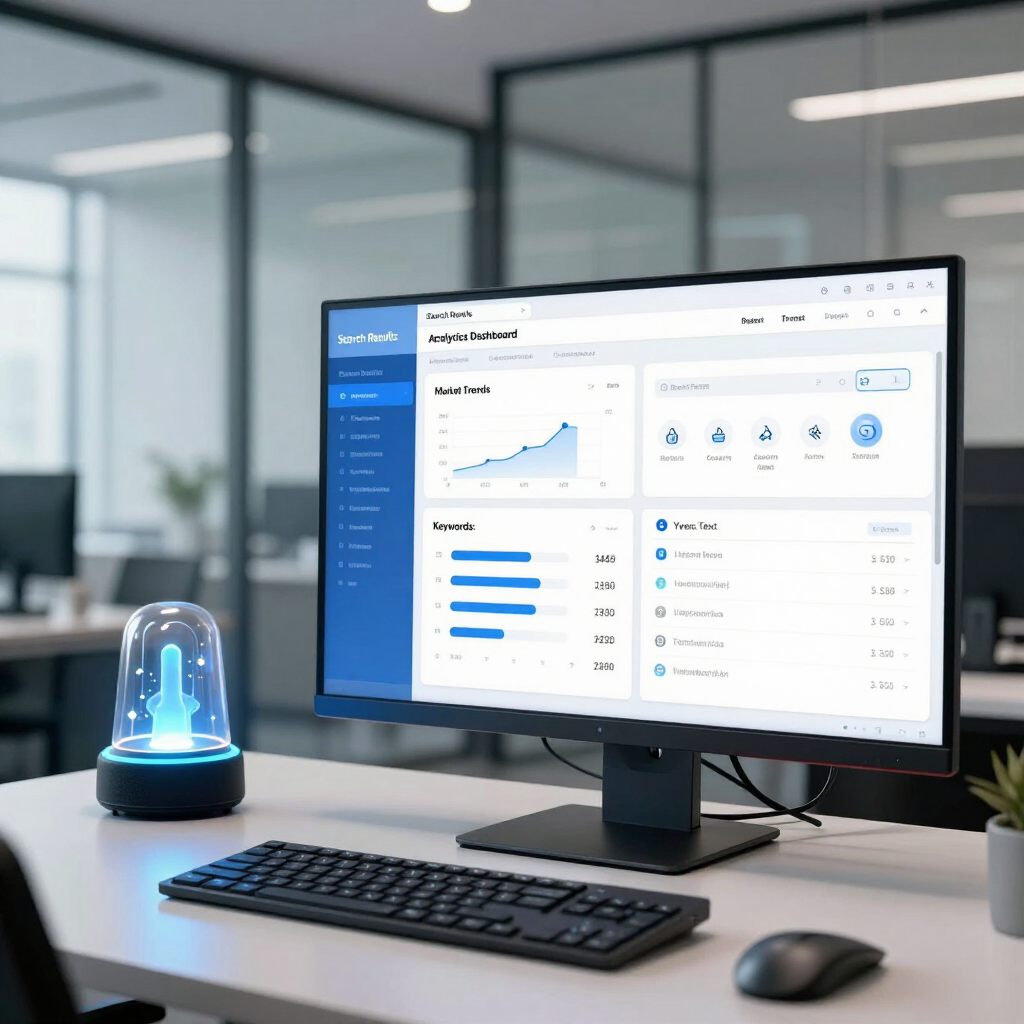
Modern tracking closes the old gap between print and digital reporting. Dynamic QR codes tell you exactly how many people scanned, when, and roughly where. PURLs and campaign-specific phone numbers tie a physical piece directly to a CRM record. UTM-tagged landing pages feed straight into your analytics dashboard alongside your digital campaigns, so print performance sits right next to everything else — not in a separate spreadsheet nobody checks.
That data does more than prove the campaign worked. It tells you which regions respond better to mail versus digital, which offer variations perform best, how long the delay typically is between someone receiving a mailer and taking action online, and where your next dollar is best spent.
Building It Into a Real Strategy
A one-off mailer paired with a one-off ad isn't an integrated strategy — it's two disconnected tactics that happen to run at the same time. A real strategy starts with brand guidelines tight enough that a printed piece and a landing page are instantly recognizable as the same business — matched colors, matched type, matched voice, no exceptions.
From there, budget gets allocated by what the data actually shows, not by habit — some campaigns lean digital-heavy for broad awareness, others lean print-heavy for a defined, high-value audience, and most land somewhere in between. Every piece, in either channel, carries a trackable code or link, and the results get reviewed and reallocated on a real cadence rather than assumed to be working.
That's the discipline behind every "Why Choose GoodPath?" answer we give — strategy first, results tracked, and digital and print treated as one system instead of two competing budgets.
FAQ: Print and Digital Marketing Together
Why is print and digital marketing together more effective than either channel alone?
Because they cover different gaps. Print builds tangible trust and reaches people in offline moments; digital adds speed, precision targeting, and real-time measurement. Together they create multiple, reinforcing touchpoints instead of just one.
How do you track a print campaign's digital impact?
QR codes, personalized URLs (PURLs), UTM-tagged landing pages, and campaign-specific phone numbers all tie a physical piece back to a measurable digital action — scans, visits, and conversions.
Is combining print and digital marketing more expensive than just running digital ads?
Not necessarily. Digital-only campaigns often cost less per impression, but integrated campaigns tend to convert at a meaningfully higher rate, which usually offsets the added print spend through a lower overall cost per acquisition.
Want a campaign that puts print and digital to work together instead of picking one? Learn more about GoodPath Marketing.
Recent Posts